

When Is It OK to Vent Our Emotions?
I threw my phone the other day. I don’t like to admit it, but I did. Thankfully, I threw it into the couch, so I still have my phone—but yes, I threw it. Irrrrr!
I’m also thankful no one else was around. Not because I’m embarrassed (I am sharing it here after all), but because my outburst could have made others feel afraid or unsafe.
This raises the bigger question: Is it ever OK to vent our emotions in front of others? And if so, how do we know when?
Anger as Protection
When a dad raises his voice at his son because the boy is ignoring his Father’s concerns and about to do something unsafe, is that OK? Likely yes. The motivation in this case is love and protection.
Frustration as Venting
When a wife tells her husband how fed up she is with his late hours, is that OK? Likely no. If the motivation is simply to “vent,” to “tell it like it is,” or to “be honest,” then the focus is more about self-relief than love. Often, it risks hurting rather than helping.
Silence as Escape—or Love
When a husband walks off without talking to his wife, is that OK? It depends.
- Yes—if it’s a conscious Pause to avoid saying something harmful, especially if he communicates: “I need to Pause and go on a walk.”
- No—if it’s dismissive, meant to escape “the noise,” or driven by self-protection. In that case, the motivation is not love for his wife, but concern for himself.
The Common Thread: Motivation
Are you catching the common element here? The key is motivation.
We are called—by God, and by Love itself—to interact with others in ways that build safety and connection, not fear or distance.
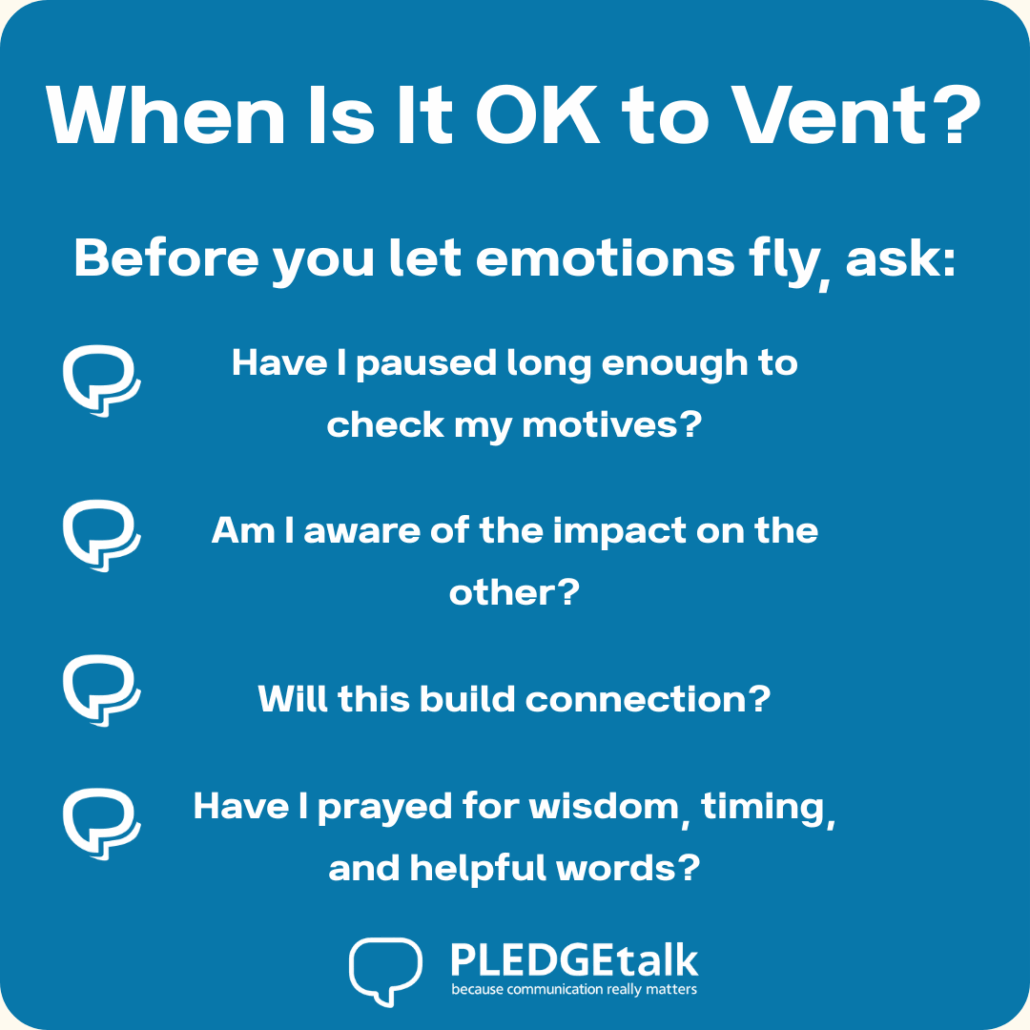
Questions to Ask Before Speaking
- Am I pausing long enough to examine my motives?
- Am I aware of how my words might affect the other person?
- Will this expression further relational connection?
- If Jesus is part of my life, have I prayed for wisdom, timing, words, and love?
If you can answer yes to all of these, then proceed—but with caution. Circumstances can shift quickly: defensiveness can rise, timing can be interrupted, emotions can escalate. In those moments, it’s often wiser to Pause again—90 seconds or more—before continuing. Pushing forward rarely produces a good outcome.
Final Thought
There’s much to consider when deciding whether or not to express emotions to another. Reflect on the above, practice, and feel free to reply with your questions—I may address them in a future post.
That’s all for now,
Mark Oelze, Author/Creator of PLEDGEtalk
– Why I want to vent –


Leave a Reply
Want to join the discussion?Feel free to contribute!